
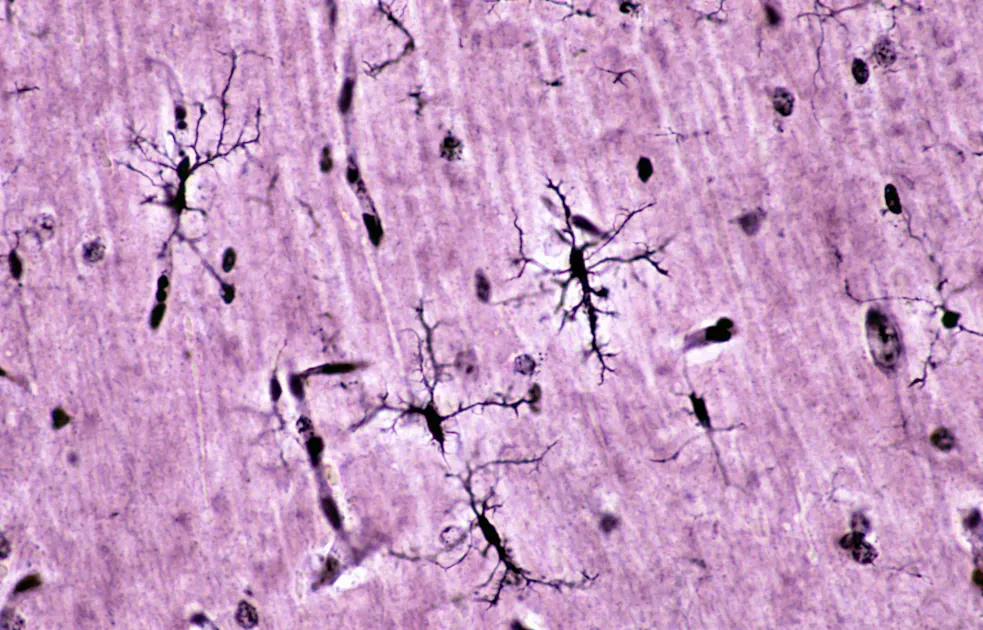
Their findings pointed to microglia—the brain’s resident immune cells (pictured above)—as a key site of activity. This genetic pattern was consistent across developmental stages, from fetal life to adulthood.
“The most important finding in our work is the fact that the genetic risk for type 1 diabetes, is also active in brain cells,” Alagpulinsa says. “This is one of the first studies tying microglia to type 1 diabetes genetic risk.”
The researchers used a statistical approach called Mendelian randomization, which uses genetic variants from large population studies to test whether one trait is likely to influence another. The team used genetic variants associated with cognitive traits, such as intelligence (reasoning and problem-solving ability), executive function (skills involved in planning, attention, and cognitive control), and educational attainment (years of schooling).
The researchers found evidence that genetic liability to certain cognitive traits was associated with different levels of type 1 diabetes risk.
“Correlation is not causation,” Alagpulinsa says. “These findings do not mean that type 1 diabetes causes cognitive differences, but rather that both may reflect shared underlying biological pathways.”