
Table of Contents
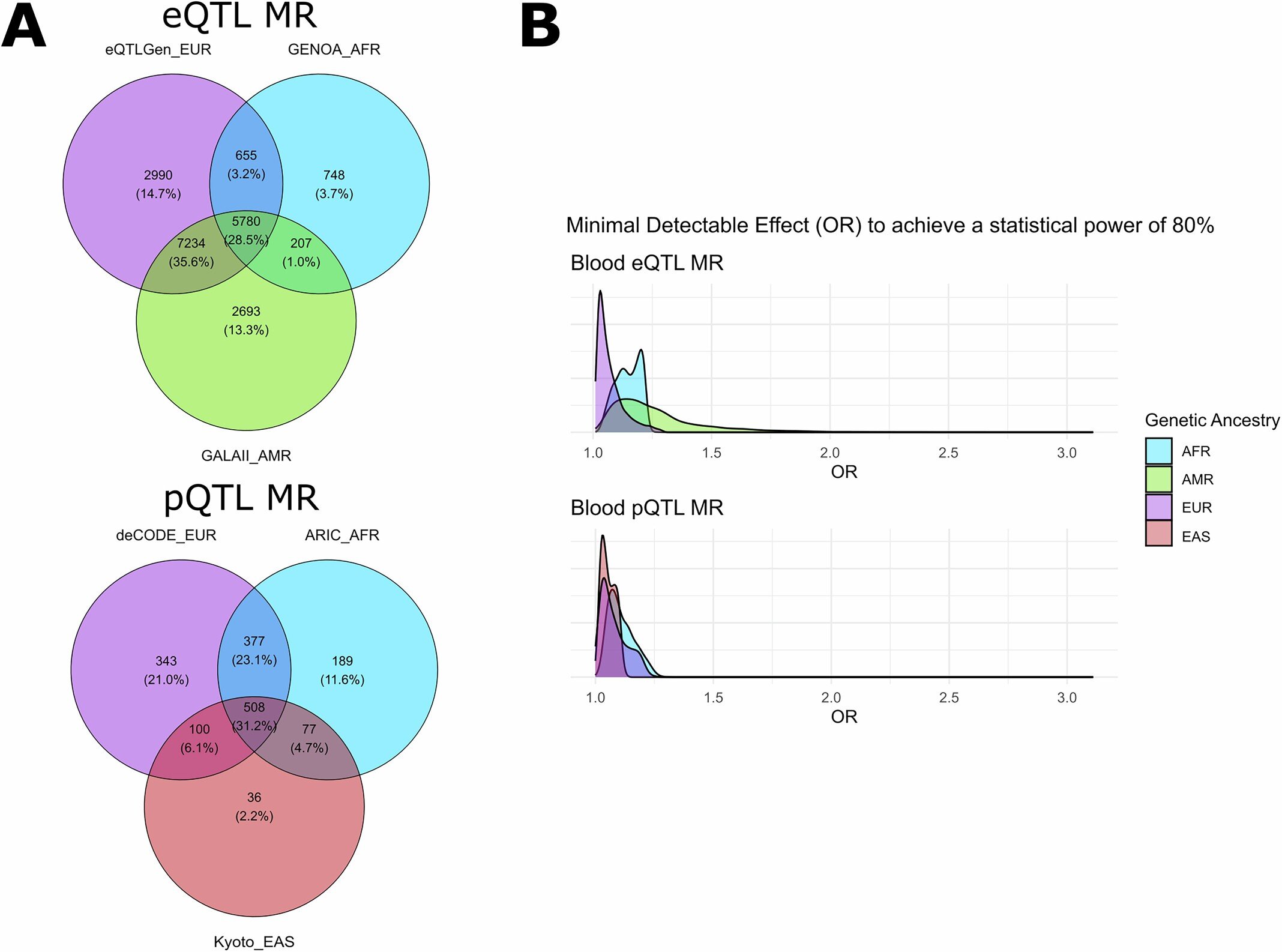
Statistical power of the causal inference analysis across ancestries. Credit: Nature Metabolism (2026). DOI: 10.1038/s42255-025-01444-1
Numerous genetic studies have identified many risk variants for type 2 diabetes (T2D)—but which genes and proteins are actually involved in the disease mechanisms? An international team led by Helmholtz Munich has now used globally collected genetic data to pinpoint the genes and proteins linked to T2D. The researchers systematically compared their results across multiple tissues and four global ancestry groups. In a study published this week in Nature Metabolism, they demonstrate that analyses limited to blood samples alone would have missed many potentially causal disease signals.
Tissue matters: The biology is often not in the blood
For many molecular studies, blood data are the most convenient source. But type 2 diabetes arises from a network of organs and cell types—for example, in adipose tissue, the liver, skeletal muscle, or the insulin-producing cells of the pancreas.
“Our analysis shows how incomplete it is to try to explain mechanisms using data from blood alone,” says Dr. Ozvan Bocher from Université de Bretagne Occidentale (France) and the Institute of Translational Genomics at Helmholtz Munich, first author of the publication. “Across seven diabetes-relevant tissues, we identified causal evidence for 676 genes—and at the same time found that a large proportion of these effects do not appear in blood.”
The paper quantifies that only 18% of genes with a causal effect in a primary T2D tissue—such as the pancreas—also show a corresponding signal in blood; conversely, 85% of the gene effects found in T2D tissues do not show up in blood.
“It is clear from our analyses that tissue context is very important in elucidating the mechanisms underpinning type 2 diabetes,” says study lead Prof. Eleftheria Zeggini, Director of the Institute of Translational Genomics at Helmholtz Munich and Professor of Translational Genomics at the Technical University of Munich (TUM).
Global genomic data strengthen results and uncover new disease candidates
The study builds on an international genomics study by the Type 2 Diabetes Global Genomics Initiative (T2DGGI). This international consortium brings together genetic data from many studies worldwide and uses so-called genome-wide association studies (GWAS) to search for DNA variants associated with the risk of type 2 diabetes. The T2DGGI analysis includes data from more than 2.5 million people, including more than 700,000 individuals of non-European ancestry.
“This study powerfully demonstrates the strength and relevance of international collaboration and large-scale genomic data to uncover the molecular mechanisms underlying complex metabolic diseases such as type 2 diabetes,” says Prof. Martin Hrabě De Angelis, Member and Spokesperson of the Executive Board (acting) and Research Director Helmholtz Munich.
The international team investigated how genetic variants influence gene activity and protein abundance—and whether this can provide clues to the genetic causes of type 2 diabetes. To do so, the researchers used so-called cis quantitative trait loci (cis-QTLs): genetic variants located near a gene that measurably alter that gene’s activity or the abundance of its corresponding protein. Across four ancestry groups from Europe, Africa, the Americas, and Eastern Asia, the team tested 20,307 genes and 1,630 proteins.
“This gave us strong evidence that genetically predicted levels of 335 genes and 46 proteins could influence T2D risk,” says Bocher. “Some of these hits represent strong candidates, as their effects were replicated in independent datasets from other studies within the same ancestry groups.” While most effects are consistent across ancestry groups, some only become visible when previously underrepresented populations are included.
Big data illuminate the genetic mechanisms of T2D
“Our findings were only possible because of the availability of in-depth information on the molecular profiles of tissues relevant to type 2 diabetes,” says Zeggini, putting the results into perspective. One thing is already clear, the researcher adds, “If we want to understand the mechanisms of type 2 diabetes and translate results reliably, we have to consider tissue biology and genetic diversity together.”
Publication details
Ozvan Bocher et al, Unravelling the molecular mechanisms causal to type 2 diabetes across global populations and disease-relevant tissues, Nature Metabolism (2026). DOI: 10.1038/s42255-025-01444-1
Journal information:
Nature Metabolism
Key medical concepts
Diabetes Type 2Genome-Wide Association Study
Clinical categories
EndocrinologyClinical genetics
Provided by
Helmholtz Association of German Research Centres
Citation:
Big data make hidden genetic drivers of type 2 diabetes visible (2026, January 29)
retrieved 1 February 2026
from https://medicalxpress.com/news/2026-01-big-hidden-genetic-drivers-diabetes.html
This document is subject to copyright. Apart from any fair dealing for the purpose of private study or research, no
part may be reproduced without the written permission. The content is provided for information purposes only.