
In this week’s issue of The Savvy Diabetic:
Want to Participate in Hill Day from Home? Here’s how!
GLP-1s/Semaglutide Benefits 17 June 2026
Diabetes Patients on Semaglutide Had Fewer Fractures
Semaglutide tied to quality of life improvements vs. placebo in type 2 diabetes, CKD
Lower Risk Of Death, Clots Among Autoimmune Patients Taking GLP-1 Drugs
GLP-1s may nearly halve risk for hepatic complications in MASLD, type 2 diabetes
Why fermented foods are so good for your gut, and 5 ways to eat more of them
News from T1Dto100:
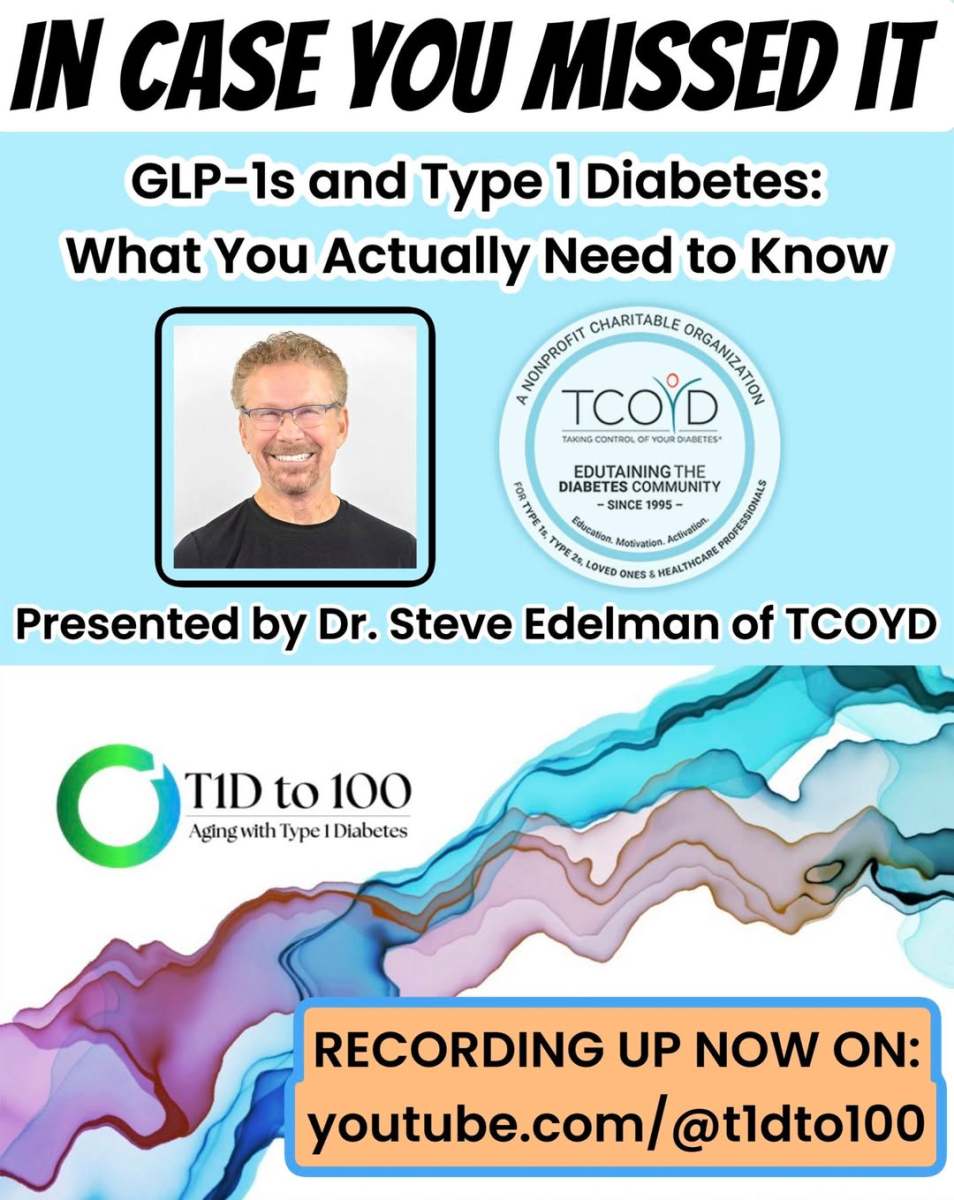
Video: GLP1s & T1D: What You Actually Need to Know with Dr. Steven Edelman
Interview: The Savvy Diabetic Series, Part 1: Living with Type 1 Diabetes Since 1965
Want to Participate in Hill Day from Home? Here’s how! by Diabetes Patient Advocacy Coalition, DPAC.org, 23-24 June 2026.
Please don’t hesitate to reach out to DPAC if you have any questions, updates, or if there’s any way we can support you here!
Associate Manager, Communications and Partnerships
arkaufman@diabetesleadership.org
GLP-1s/Semaglutide Benefits

Diabetes Patients on Semaglutide Had Fewer Fractures by Kristen Monaco for MedPageToday.com, 15 June 2026.
The GLP-1 receptor agonist semaglutide (Ozempic, Wegovy) was associated with a 15% lower risk for fractures in adults with type 2 diabetes, a review of medical records found. The findings are “reassuring,” Kim said at ENDO 2026, the annual meeting of the Endocrine Society, “but it would be exciting if these medications were truly bone protective.” Diabetes Patients on Semaglutide Had Fewer Fractures
Semaglutide tied to quality of life improvements vs. placebo in type 2 diabetes, CKD by Lucas Laboy for Healio.com/nephrology, 12 June 2026.
Compared with placebo, semaglutide was associated with improved quality of life outcomes for patients with type 2 diabetes and chronic kidney disease. Study data were presented at the European Renal Association Congress in Glasgow, Scotland. Semaglutide tied to quality of life improvements vs. placebo in type 2 diabetes, CKD
Lower Risk Of Death, Clots Among Autoimmune Patients Taking GLP-1 Drugs by Dennis Thompson for HealthDay.com, 17 June 2026.
GLP-1s may nearly halve risk for hepatic complications in MASLD, type 2 diabetes by Erin > Boyle for Healio.com/gastroenterology, 17 June 2026.
Use of GLP-1s was associated with significantly reduced risk for hepatic complications among patients with metabolic dysfunction-associated steatotic liver disease and type 2 diabetes. The observational study, published in The American Journal of Gastroenterology, showed that the reduction was prompted by fewer cases of incident cirrhosis. Researchers also found that GLP-1s may have a greater disease-modifying potential earlier in the fibrosis trajectory, before advanced fibrosis is established. GLP-1s may nearly halve risk for hepatic complications in MASLD, type 2 diabetes
Why fermented foods are so good for your gut, and 5 ways to eat more of them by Anahad O’Conner for WashingtonPost.com, 17 June 2026.
 Almost every culture on earth has fermented foods in its traditional cuisine. These foods — from yogurt to sauerkraut to kimchi and kefir — are made with microorganisms that transform them. Fermentation provided a way to preserve foods thousands of years before refrigeration was invented, and it was used to impart unique flavors and textures. But nowadays, fermented foods are enjoying a resurgence in large part because of research illustrating their nutritional benefits. Scientists have found in studies that eating fermented foods may lower inflammation, improve blood sugar control and increase the diversity of your gut microbiome, which is linked to a lower risk of developing chronic diseases.
That’s in part because fermented foods are often loaded with probiotics — friendly microorganisms that confer health benefits. These microbes produce essential nutrients such as vitamins K and B. They synthesize health-promoting compounds such as short-chain fatty acids. They increase the bioavailability of iron, zinc and other minerals. And they make some foods easier to digest.
In 2021, a panel of scientists defined fermented foods as “foods made through desired microbial growth and enzymatic conversions of food components.” This definition distinguishes fermented foods that are deliberately transformed by microbes through a controlled process from, say, spoiled foods that are unintentionally altered by microbes.
Chris Damman, a microbiome and nutrition expert and gastroenterologist at the digestive health center at the University of Washington Medical Center. recommends eating at least one or two servings of fermented foods daily. Keep in mind that some fermented foods can be relatively high in sodium, such as sauerkraut, kimchi and pickles. You may also need to consult your doctor or health care provider if you’re immunocompromised, as the live microbes in some fermented foods could cause infections in people with weakened immune systems.
For otherwise healthy adults, start with your favorite meals and look for ways to incorporate fermented foods. If you like eating granola or cereal for breakfast, try using kefir instead of milk. If you’re having a cheeseburger or veggie burger for lunch, add sauerkraut or kimchi as one of your toppings. If you make a salad for dinner, put a little sauerkraut on top. If you’re making a stir fry, try topping it with kimchi.
Read more: Why fermented foods are so good for your gut
News from T1Dto100
**************************************************************
A DEFINITE MUST-WATCH!!!
 For the first time ever, the ADA’s 2026 Standards of Care now officially support GLP-1 medications for adults living with type 1 diabetes and obesity. For years, these drugs have been talked about in T1D circles but used off-label, often with a fight to get them prescribed or covered by insurance. Now the guidelines are catching up. But what does that actually mean for you and your care team?
Dr. Steven Edelman MD, Endocrinologist, Professor, Founder of TCOYD { … and a T1D too!) discusses where they might fit in a care plan (weight, insulin resistance, heart and kidney health), the real risks and open questions, and what this new ADA guidance does and doesn’t change, and how to have a smart conversation with your own care team.
Dr. Edelman is a professor of medicine at the University of California, San Diego and the director of the Diabetes Care Clinic at the Veterans Affairs Medical Center in San Diego. He has been living with type 1 diabetes since 1970, and is the founder and director of Taking Control of Your Diabetes (TCOYD), a not-for-profit organization, whose mission is to educate and motivate people with diabetes to take an active role in their condition.
**************************************************************
Interview: The Savvy Diabetic Series, Part 1: Living with Type 1 Diabetes Since 1965 by Kaleigh Rhoades for DiabetesResearchConnection.org, 19 June 2026.
 Many people in the Type 1 diabetes community know Joanne Milo as the voice behind The Savvy Diabetic, where she has spent years sharing practical advice, research updates, and resources for living well with T1D. But long before she became an educator and advocate, she was an 11-year-old girl learning to navigate a life-changing diagnosis in 1965.
In this first installment of our three-part series, Joanne reflects on her diagnosis and the remarkable evolution of diabetes technology she has experienced firsthand. In the next two blogs, we’ll explore how she built communities that support thousands of people with T1D and why she is now focused on improving care and representation for older adults living with the condition.
Read more: The Savvy Diabetic Series, Part 1: Living with Type 1 Diabetes Since 1965