
Table of Contents
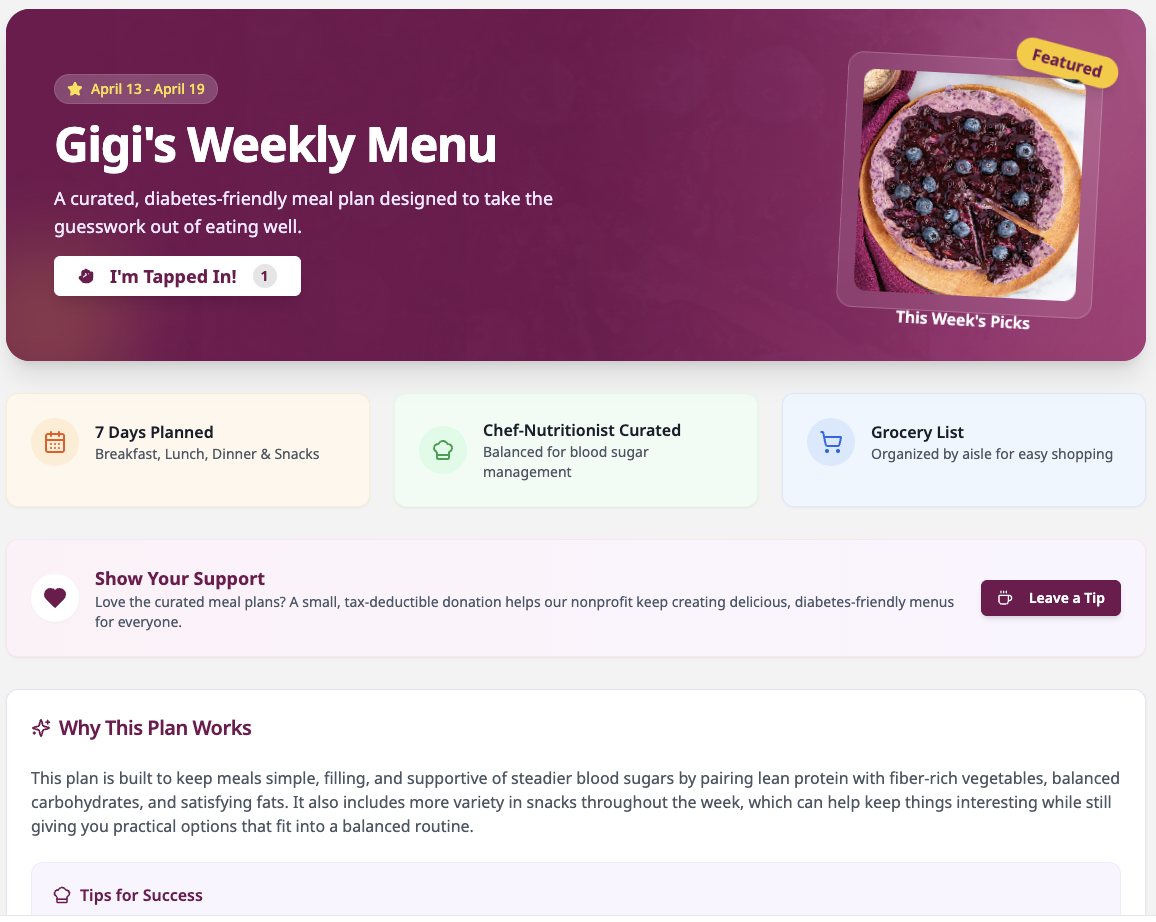
A high-protein diabetes meal plan can make it easier to build balanced meals, stay full longer, and support steadier blood sugars. This week’s menu includes simple breakfasts, satisfying lunches and dinners, and more snack variety to keep things practical and realistic.
This content contains affiliate links, which helps hangrywoman.com to provide free recipes and resources. Thank you for your support of my blog and non-profit organization, Glucose Guide.
Share
This week’s menu is built around a simple idea: pair protein, fiber-rich vegetables, balanced carbohydrates, and satisfying fats in a way that feels realistic for everyday life. It also includes more snack variety throughout the week, which matters more than people sometimes realize.
When your snacks are both practical and interesting, it can be easier to stay consistent, avoid feeling deprived, and keep meals from becoming painfully repetitive.
The overall structure also lines up with well-established diabetes nutrition guidance that emphasizes balanced meals, the plate method, carb awareness, and fiber-rich foods.
Why this meal plan works for diabetes
A good diabetes-friendly meal plan does not need to be perfect, restrictive, or joyless.
What it does need is a pattern you can repeat. This week’s menu leans on meals that are rich in protein, include vegetables often, and use moderate portions of carbohydrate foods like quinoa, brown rice, wild rice, sweet potatoes, fruit, and beans.
That kind of structure can support steadier energy and make blood sugar patterns easier to understand.
Another reason this plan works is that it does not rely on one single “healthy” food or one magic ingredient. Instead, it repeats a helpful formula in different ways across the week: eggs, yogurt, chicken, turkey, seafood, tofu, vegetables, grains, legumes, nuts, and seeds.
That makes it easier to build consistency without making every day feel like a copy-and-paste lunch container from sadness headquarters. The ADA’s Diabetes Plate method uses this same kind of balanced framework: non-starchy vegetables, lean protein, and quality carbohydrates.
This plan includes breakfasts like:
Vegetable and feta omelette
Greek yogurt with pumpkin seeds and blueberries
Egg white veggie muffins
Chia pudding with raspberries
Scrambled eggs with kale and toast
Protein pancakes with blueberries
Spinach and mushroom egg white frittata
Lunches and dinners stay anchored around high-protein meals with vegetables and a balanced carb source, including:
Grilled chicken quinoa salad
Seared salmon with sweet potatoes and broccoli
Shrimp avocado salad
Turkey lettuce wraps
Stuffed bell peppers with ground turkey and brown rice
Grilled tofu salad
Baked tilapia with brown rice pilaf
Turkey and vegetable stir-fry with quinoa
And the snack lineup has more variety than a lot of meal plans usually do, including:
Celery with low-fat cream cheese
Roasted chickpeas
Hard-boiled eggs with cherry tomatoes
Almond butter on celery
Cottage cheese with peaches
Carrot sticks with hummus
Mixed nuts with celery
Cucumber with Greek yogurt dip
Greek yogurt with walnuts
Strawberries with almonds
Cheese stick with cucumber
Boiled egg with bell peppers
Greek yogurt with pecans
Pear with almond butter
That variety matters because balanced snacks can help bridge longer gaps between meals, add fiber or protein where the day needs it, and give you options that feel less monotonous.
What makes a diabetes-friendly snack actually helpful?
A snack does not have to be tiny, sad, or carb-free to be supportive. A helpful snack usually does one or more of these things:
gives you protein
adds fiber
includes a moderate portion of carbs
keeps you from getting overly hungry and then bulldozing the pantry later
fits your medication, insulin, schedule, and real life
That’s why the snack variety in this plan is so useful. Some snacks are more protein-heavy, like eggs, Greek yogurt, cottage cheese, and cheese sticks. Others bring fiber and crunch, like celery, cucumbers, berries, pears, carrots, chickpeas, and nuts. Together, that gives you more flexibility depending on whether you need something quick, something more filling, or something that travels well.
Fiber can support blood sugar control and weight management, and that combining carbs with protein can help with fullness and reduce big spikes.
You do not need to fear carbs to build balanced meals
This plan is not extremely low carb, and that is intentional. For many people with diabetes, the goal is not to eliminate carbohydrates altogether, but to learn how different amounts and types of carbs work in their body.
Carbohydrate-containing foods like fruit, beans, quinoa, brown rice, wild rice, toast, sweet potatoes, and chickpeas can absolutely fit into a diabetes-friendly routine. What often helps is paying attention to portions, pairing carbs with protein and fiber, and noticing your own blood sugar response.
That means your version of this plan may need a little editing. Maybe you do better with less rice at dinner and a little more non-starchy veg. Maybe you need a slightly bigger breakfast to avoid post-lunch chaos. Maybe you use insulin and need to match doses more carefully to meals and snacks.
A note on protein, fiber, and staying power
One of the strongest features of this week’s plan is how protein-forward it is. Meals built around eggs, Greek yogurt, chicken, turkey, shrimp, salmon, tilapia, cod, lean beef, tofu, nuts, seeds, and dairy can help make the day feel more satisfying.
Pair that with vegetables, fruit, legumes, and whole-grain or higher-fiber carbs, and you get meals that are often easier to stick with.
Fiber deserves a little spotlight too. It is found in foods like berries, pears, chickpeas, vegetables, chia seeds, quinoa, brown rice, Brussels sprouts, and sweet potatoes.
The CDC specifically notes that fiber supports blood sugar control and may also help with weight management and heart health, which matters because diabetes care is never just about one glucose reading floating in the void.
How to use this meal plan in real life
You do not need to follow this menu with robot precision for it to be useful. A plan like this can work well when you treat it as a framework.
Try using it like this:
Repeat what makes life easier
If you love one breakfast, repeat it. If one lunch packs well, keep it in the rotation. Consistency can make blood sugar patterns easier to read.
Swap within the same meal structure
Trade quinoa for brown rice. Swap tilapia for salmon. Use tofu instead of turkey. Keep the same overall balance even if the ingredients change.
Watch your personal blood sugar trends
A meal plan is a starting point, not a verdict. Your glucose response can be shaped by medication, insulin timing, stress, sleep, hormones, activity, illness, and more. Track what happens and adjust from there.
Use snacks on purpose
Snacks can be a tool, not a temptation trap. They can help you prevent getting overly hungry, support pre- or post-activity needs, or fill in nutrition gaps during a busy day.
This week’s meal plan at a glance
The plan averages roughly 1,390 to 1,500 calories per day, with a strong protein base and moderate carbohydrate intake, while rotating snacks more intentionally throughout the week.
This also gives you room to add any options that help you maintain flexibility and add in any foods or snacks that you love.
That snack variety is one of the best parts of the plan because it gives you more flexibility without making the week feel nutritionally all over the place. It is structured, but not stiff. Helpful, but not bossy. Which frankly is the exact vibe many of us need from food.
The bottom line
A diabetes meal plan does not have to mean boring food, strict rules, or eating the exact same snack until you start resenting almonds on a spiritual level. This week’s menu works because it keeps the formula simple: protein, fiber, balanced carbs, healthy fats, and enough snack variety to keep the week interesting.
That combination can make meal planning feel more sustainable, which is usually the real win.
Need help turning meal ideas into a routine you can actually stick with? Track your meals, snacks, and blood sugar patterns inside the Diabetes Food Journal so you can spot what works for your body and build more confidence over time: https://heygigi.app