
In this week’s issue of The Savvy Diabetic:
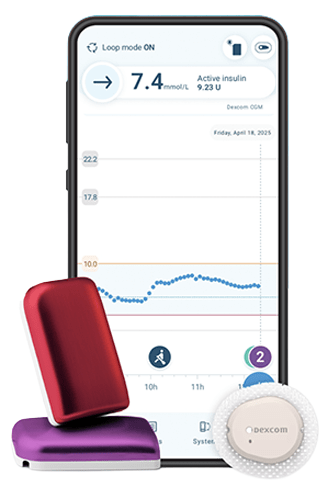
ViCentra launches smartphone-controlled Kaleido AID patch pump
Improving Care for Diabetes-Related Nerve Pain
Emergency Readiness for Diabetes and Beyond
Balancing Mental Health and Type 1 Diabetes
Baxfendy (Baxdrostat): A New Drug for High Blood Pressure
Dose of Reality: The Phil Podcast with Ginger Vieira, The Diabetes Nerd
How scientists found a weakness in one of the deadliest ‘undruggable’ cancers
Why are some people mosquito magnets?
News from T1Dto100
Free Webinar: Proactive Care Planning with Known Wishes, 26 May 2026
7 gut health secrets that can slow aging
Just for a smile, by Brad Slaight!
ViCentra launches smartphone-controlled Kaleido automated insulin patch pump system by Sean Whooley for DrugDeliveryBusiness.com, 12 May 2026.
ViCentra announced that it launched its Kaleido smartphone-controlled hybrid closed-loop insulin delivery system in Europe. The new system combines the company’s Kaleido patch pump with Diabeloop’s DBLG2 algorithm and the Dexcom G7 continuous glucose monitor (CGM). It comes on the heels of Diabeloop’s CE mark for the next-generation algorithm paired with G7. ViCentra already offers Kaleido with the previous-generation DBLG1 algorithm and Dexcom G6. It says starting on these now remains the fastest path to the next-generation combination.
Kaleido is a miniature, patch-style insulin pump. ViCentra describes it as the smallest, lightest and most precise insulin patch pump in its class. The pump offers users options in terms of wearability and comes with two durable, rechargeable pumps, eliminating the need to dispose of the pump every three days, while the infusion set lasts for that three-day span. Rather than a traditional syringe pump setup, Kaleido has a micro pumping chamber that uses valves alongside a unique blockage detection system.
Running on a user’s smartphone, DBLG2 works as a self-learning algorithm. It continuously analyzes glucose data, calculates insulin needs in real time and automatically adjusts delivery. This significantly reduces the daily mental burden of diabetes management, the company says. It requires no mandatory meal announcements as well.
Read more:
Improving Care for Diabetes-Related Nerve Pain by Michael Howerton for diaTribe.org, 18 May 2026
 The Relief of Chronic Pain Act won’t fix every problem with treating chronic pain, but supporters say it’s a meaningful step. It would seek to lower costs and barriers to treating pain, and make sure recommended treatments aren’t blocked by insurers.
How to take action: Contact your members of Congress and let them know you support the Relief of Chronic Pain Act. To sign the petition or to learn more, click here.
Despite diabetes-related nerve pain affecting millions of people, many find themselves cycling through ineffective treatments, including opioids (which have a higher risk for addiction), simply because better, safer options are out of reach.
A new piece of legislation, the Relief of Chronic Pain Act, aims to change that. It seeks to improve access to non-opioid treatment options for people living with chronic pain by reducing financial barriers and administrative obstacles that affect timely access, according to a letter of support to members of Congress signed by more than a dozen patient advocacy organizations, including diaTribe.
Diabetic peripheral neuropathy is one of the most common diabetes complications. It happens when nerves are damaged by persistently high blood sugar levels over time. When that nerve damage produces pain – often described as burning, stabbing, electric shock-like sensations, or extreme sensitivity to touch – it’s called diabetic peripheral neuropathic pain, or DPNP.
DPNP commonly affects the feet and lower legs, but can also involve the hands and arms. For many, it’s worse at night, disrupting sleep and further affecting quality of life. It can make it difficult to walk, work, and carry out everyday activities. Nearly half of people with diabetes will develop some form of peripheral neuropathy during their lifetime.
Several drugs are FDA-approved for DPNP, and others are used off-label. They include:
Anticonvulsants, such as pregabalin (Lyrica) and gabapentin
Antidepressants, including SNRIs (serotonin-norepinephrine reuptake inhibitors) like duloxetine, venlafaxine, and desvenlafaxine, as well as TCAs (tricyclic antidepressants) like amitriptyline
Topical agents, such as capsaicin cream or lidocaine patches
Opioids are sometimes prescribed, but evidence for their effectiveness in chronic neuropathic pain is limited
While some opioids like tapentadol are FDA-approved for DPNP, the American DIabetes Association recommends that they should not be used to treat nerve pain for people with diabetes. New, more targeted non-opioid treatments are desperately needed, which is why proposed legislation like the Relief of Chronic Pain Act is so important. New treatments are also being studied, including pilavapadin (a non-opioid AAK1 inhibitor), which has shown promising results in early research trials for DPNP.
Read more:
 Taking care of your mental health with type 1 diabetes (T1D) is just as important as managing your blood sugar and taking your insulin. Statistics show that mental health issues can affect people of all ages living with T1D:
Breakthrough T1D Mental Health Guide; Thriving with T1D starts with your mental and emotional well-being. Our Mental Health Guide offers information to help you better manage your mental health with type 1 diabetes, including:
Funded Research in Mental Health and T1D:
Read more: Balancing Mental Health and Type 1 Diabetes
Baxfendy (Baxdrostat): A New Drug for High Blood Pressure by Anna Vidovszky for diaTribe.org, 18 May 2026.
 People with difficult-to-manage high blood pressure have a new treatment option with the recent FDA approval of Baxfendy (baxdrostat). Even with lifestyle changes and multiple medications, blood pressure can be difficult to manage. This challenge has pushed researchers to look beyond traditional therapies targeting blood vessels or fluid balance and explore the hormonal systems that drive high blood pressure (hypertension). Approved by the FDA in May 2026, Baxfendy (baxdrostat) offers a new approach for people with treatment-resistant hypertension, including those living with diabetes who face heightened risks.
Baxdrostat, an aldosterone synthase inhibitor, is an oral, once-daily pill designed to reduce blood pressure by targeting a hormone called aldosterone, which is one of the body’s key regulators of salt and water balance. While most blood pressure drugs work by blocking the effects of hormones like angiotensin or aldosterone, baxdrostat works by blocking the production of aldosterone itself. Aldosterone tells your kidneys to hold onto salt and water, which may increase blood volume and raise blood pressure. Baxdrostat prevents your adrenal glands from making as much of this hormone, which in turn helps the body release excess salt and water and lowers pressure in the arteries.
In other words, when your kidneys are getting constant messages to hold on to salt, baxdrostat turns down the volume on these signals, helping your body get rid of excess salt and water.
If you or someone you know has high blood pressure that’s been difficult to manage, there are ongoing baxdrostat clinical trials currently recruiting participants.
The BaxDuo-Pacific trial is evaluating the combination of baxdrostat and dapagliflozin (Farxiga) in adults with chronic kidney disease and high blood pressure. If you have type 1 diabetes and have been treated with an SGLT-2 inhibitor for at least four months (without diabetic ketoacidosis during that period), you may be eligible for this study.
Similarly, the Prevent-HF trial is comparing the combination of baxdrostat and dapagliflozin to dapagliflozin alone in adults with type 2 diabetes who are at least 40 years old.
Read more: Baxfendy (Baxdrostat): A New Drug for High Blood Pressure
Dose of Reality: The Phil Podcast and Diabetes Nerd with Ginger Vieira, broadcast 22 May 2026.
 Dr. Phil uncovers the hidden dangers tied to today’s explosion of at-home injections — from insulin and GLP-1s to life-saving emergency medications. This is SO WELL DONE!!! Kudos to Ginger Vieira, the Diabetes Nerd!!!
How scientists found a weakness in one of the deadliest ‘undruggable’ cancers by Carolyn Y. Johnson for WashingonPost.com, 24 May 2026.
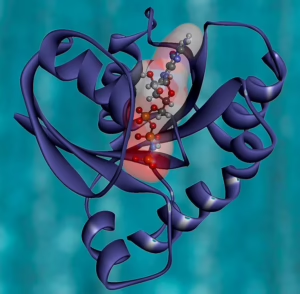 For decades, one of the deadliest cancers had an Achilles’ heel lying in plain sight. (AND often the cause of a form of Type 1 diabetes)
Pancreatic cancer is an exquisitely cruel diagnosis, leaving only 13 percent of people alive after five years. But in the early 1980s, scientists discovered a weakness — a mutated protein called KRAS — that spurred the aggressive growth and spread an array of tumors. In pancreatic cancer, it would turn out to be a key driver of nearly every case. There was just one problem. The KRAS protein they needed to block was flat and smooth, without the crevices and cracks, pockets and sockets that a drug needs to get a toehold.
Scientists came up with various nicknames. A bowling ball with no holes. A greasy ball. Undruggable. The elephant in the room for cancer research — everyone knows it’s there, nobody wants to deal with it.
No longer.
In the span of a few weeks, the conventional wisdom on pancreatic cancer and KRAS has been upended. In April, biotech company Revolution Medicines announced that its experimental pill, called daraxonrasib, had notched an unprecedented success — patients lived for 13 months, twice as long as those given regular chemotherapy. The full details will be presented next weekend at the American Society of Clinical Oncology meeting in Chicago, but federal regulators have already expanded access to the drug while it is being reviewed.
“It’s the start of a huge wave for this disease,” said Eileen O’Reilly, a gastrointestinal medical oncologist at Memorial Sloan Kettering Cancer Center. Following behind are other drugs that may work better and the potential to use the approach against lung and colorectal cancers.
Read more: How scientists found a weakness in one of the deadliest ‘undruggable’ cancers (access may require subscription)
I ALWAYS thought I was a magnet for mosquitoes because I have Type 1 diabetes … and perhaps there was sugar/sweetness or some byproduct that attracted these critters. BUT … this is a far more scientific explanation!
 Scientists are now making progress in deciphering the complex chemical cocktail that makes particular people more enticing to these disease-spreading bloodsuckers. “It’s not a misconception—mosquitoes are attracted to some people more than others,” Frederic Simard of France’s Institute of Research for Development told AFP. “But we are not all magnets all the time,” the medical entomologist added.
A range of sensory cues can cause mosquitoes to pick one human over another—mainly the smell and heat our bodies give off, and the carbon dioxide we exhale. Female mosquitoes—which are the only ones that bite—detect these signals with finely tuned receptors, then choose their target accordingly. “We have known for over 100 years that mosquitoes are attracted by the carbon dioxide that we exhale—this is the first signal that triggers their behavior” when they are dozens of meters away, Swedish scientist Rickard Ignell told AFP.
Within around 10 meters, “mosquitoes will start detecting our odor, and in combination with carbon dioxide,” this attracts them even more, said the senior author of a recent study on the subject.As they get closer, body temperature and humidity make particular humans even more enticing.
The idea that mosquitoes prefer particular blood types “has no scientific basis,” Simard said. “There have been some studies, but only involving very few people,” he said. “Nor is it related to skin, eye or hair color,” he added.
Odor, on the other hand, matters greatly. “A soup of molecules produced by our microbiota is more—or less—appealing to mosquitoes,” Simard explained. Humans release between 300 and 1,000 different odorous compounds, research has shown, but scientists are only just beginning to understand which ones attract mosquitoes.
The woman the mosquitoes most liked to bite—which included pregnant women in their second trimester—produced a large amount of a particular compound made by a breakdown of the skin oil sebum. That even a small increase of this compound—called “1-octen-3-ol“, or mushroom alcohol—made a difference came as a surprise, Ignell emphasized. “Mosquitoes are fascinating creatures,” he added.
Drinking beer has also been linked to attracting mosquitoes, because it raises body temperature, increases the amount of exhaled CO2 and changes skin odor, according to several studies.
Read more: Improving Care for Diabetes-Related Nerve Pain
News from T1Dto100
Free Learning Series Webinar: Proactive Care Planning with Known Wishes
Date: Tuesday, 26 May 2026
Time: 5pm PT / 8pm ET
Zoom Register: https://us02web.zoom.us/meeting/register/RPyB_hEVS5uTPvFgEA5Heg
 T1Dto100 is excited to host a webinar: “Proactive Care Planning — Having a Strong Voice in the Future of Your Care,” with Dr. George Birchfield and advance care planning specialist Hilary Walker of Known Wishes.
When I put this on the calendar, someone asked me, “Joanne, isn’t this a little morbid?” Late life and end-of-life planning discussions can feel taboo, especially in the Type 1 diabetes community, where we love to talk about LIVING: better tech, more years, better outcomes.
But when I think about who we are — we’re planners! We check, adjust, and plan ahead every day so we’re never caught off guard. Proactive care planning is an extension of that: making sure your voice and your wishes for your diabetes care stay in the room even when you can’t speak for yourself. It is the ultimate definition of CONTROL, a word we know so well.
It won’t be heavy or scary. Our speakers are experts at sharing practical, honest, and genuinely freeing information. If you have questions or comments for the speakers, please share them below in Comments or when you register.
I hope to see you there. Can’t make it? A link to the recording will be shared on our YouTube channel when available: https://www.youtube.com/@T1Dto100
7 gut health secrets that can slow ageing by Amy Fleming for ScienceFocus.com, 26 April 2026.
 When she died in 2024, Spain’s Maria Branyas was the world’s oldest woman. She was 117. Experts believe the secret to her longevity may have been the bacteria living in her gut – her microbiome – and luckily, before she died, she donated stool samples to medical scientists so they could learn more about it. The international team of researchers studying the samples were stunned to find that, along with her advantageous genetic profile, her gut was flourishing with the associated microbial community of youth.
 There was plenty of Bifidobacterium, which typically gets star billing in probiotic supplements due to its inflammation-reducing properties, not to mention its ability to boost our immune systems. It also aids in digestion and helps produce essential micronutrients like vitamins. Branyas may be the most extreme example, but record numbers of people are now living past their 100th birthday.
Yet as more of us live longer, more of us are having to live with chronic disease, so the goal of longevity researchers is to work out how to stretch our healthspan – the illness-free years of our lives. Gut health is a promising target for achieving this. While we’re largely stuck with our genes, our unique microbiomes can be influenced by diet and lifestyle. As scientists learn more about what keeps the gut microbiomes of the longest-lived people so youthful, the better our chances are that more of us can follow in their footsteps…
Just for a smile, by Brad Slaight, founder of DiabetesHeroSquad.com

Vending machines should be designed to accept glucose tabs in the coin slot so people with diabetes can exchange them for some better tasting snacks to raise blood sugar.
About Brad: Brad Slaight is an award winning actor, writer, and comedian. He has appeared on Parks and Recreation; NBC’s Funny People; Married, With Children; Unsolved Mysteries; Scream; Freshman Dorm; and a two year costarring role on The Young & the Restless. As a comedian and writer his credits include over 50 TV and cable shows. He is also a world renowned playwright. Brad has lived with type 1 diabetes for many years!