

In this week’s issue of The Savvy Diabetic:
New-Onset Type 1 Diabetes Risk Higher for Young People with Autoimmune Disease
Scripps Research Discovery Could Improve Type 1 Diabetes Prevention &Treatment
SynchNeuro’s CGM Could Measure Glucose Levels Using Brainwaves
GLP-1s Show Promise in Treating Dementia, Addiction
Three More Deaths Reported After Dexcom G7 Faults
Preserving Skin Integrity with Chronic Device Use in Diabetes
An Anniversary!
New-Onset Type 1 Diabetes Risk Higher for Young People with Autoimmune Disease by Michael Monostra for healio.com/endocrinology, 29 October 2025.
Adolescents and young adults with preexisting autoimmune disease are more likely to develop type 1 diabetes than those without an autoimmune disease, researchers reported in Diabetes Care.
“As opposed to children, diagnosing type 1 diabetes at adulthood is challenging, and unfortunately, up to 40% of adults diagnosed with type 1 diabetes are being misclassified as having type 2 diabetes,” said Amir Tirosh, MD, PhD, head of the division of endocrinology and diabetes at Sheba Medical Center in Israel. “This is because type 2 diabetes is highly prevalent in adulthood, and risk factors that were traditionally attributed to increased risk for type 2 diabetes (such as obesity) cannot be used as a differentiator between diabetes types, as they are also highly prevalent among people with type 1 diabetes, and may even increase the risk for developing type 1 diabetes.
Therefore, we need to increase awareness of specific risk factors and clinical scenarios that are associated with a higher risk for type 1 diabetes, and that require additional workup to better differentiate between the various etiologies of hyperglycemia.” Tirosh said people with autoimmune diseases should undergo autoantibody screening for type 1 diabetes, especially when diabetes or prediabetes is detected.
“In the decision of whether or not to test adults with new-onset diabetes or prediabetes for autoantibodies, we rely too much on age and anthropometrics. This is confusing and may be misleading,” Tirosh said. “We need to remember that type 1 diabetes may develop at any age … and that overweight and obesity do not exclude type 1 diabetes diagnosis. On the contrary, they even increase the risk for type 1 diabetes.
Read more: New-onset type 1 diabetes risk higher for young people with autoimmune disease
Scripps Research Discovery Could Improve Type 1 Diabetes Prevention and Treatment by Scripps Research at Scripps.edu, 8 October 2025.
 Type 1 diabetes is an autoimmune disease in which the immune system mistakenly attacks the cells that produce insulin, a critical hormone that regulates blood sugar in the body. Scientists at Scripps Research have recently discovered a new type of cell that helps protect insulin production, paving the way for understanding how researchers could prevent or reverse type 1 diabetes.
The new findings, published in Cell Reports on September 23, 2025, reveal how vascular-associated fibroblastic cells (VAFs) act as molecular mediators of immune tolerance in the pancreas—actively protecting insulin-producing cells from the immune system. This discovery helps explain several puzzling features of type 1 diabetes, including why the disease often has such a long preclinical phase—the symptom-free, early stage of the disease where the immune system is beginning to destroy insulin-producing cells, but blood sugar levels are still normal—and suggests that early intervention could be feasible in the future.
“Identifying these VAFs is an exciting step toward a better understanding of how the pancreas interacts with the immune system,” says Luc Teyton, professor in the Department of Immunology and Microbiology at Scripps Research and senior author of the study. “This finding unlocks a new understanding of autoimmunity and could help us design better therapeutics for type 1 diabetes and inform how we prevent or reverse the disease.”
“This discovery reframes how we think about type 1 diabetes,” says former Scripps Research postdoctoral researcher and first author Don Clarke. “Rather than just asking why the immune system attacks, we can now ask: what disrupts the pancreas’s natural ability to maintain tolerance? And more importantly, how can we restore it?”
Read more: Scripps Research discovery could improve type 1 diabetes prevention and treatment
SynchNeuro’s CGM Could Measure Glucose Levels Using Brainwaves by Team Diabetech for diabetech.info, 27 October 2025.
A startup called SynchNeuro is developing a small wearable device that sits behind the ear and measures brain electrical activity using electroencephalography (EEG). These brainwave signals may reflect changes in glucose levels, as well as information about sleep, stress, and metabolism, all without piercing the skin.
The idea builds on research showing that when glucose levels shift, the brain’s hypothalamus and connected regions emit distinctive electrical patterns. SynchNeuro’s device detects these EEG signals from the skin’s surface and uses algorithms to translate them into glucose trends. The data syncs with an app that turns those readings into simple insights, showing how the body responds to food, exercise, and rest.
Early testing suggests accuracy close to current glucose monitors, but with almost no delay. Since brain activity changes in real-time, this kind of monitoring can detect glucose drops or spikes the moment they occur.
Founder and CEO of SynchNuero, Dr. Casey Halpern, discusses the science behind the company’s technology, its current development stage, and its potential direction over the next few years. He also shared how this approach could shape the future of noninvasive glucose monitoring.
T1D and Aging Research with Dr. Medha Munshi, 10/30/25
The recording from Dr. Medha Munshi’s presentation about the exciting developments in Type 1 Diabetics and Aging Research is up on our YouTube channel now!
Medha Munshi, MD, has been a researcher in gerontology and endocrinology for over 20 years, long before the issues we face as we live with and age with Type 1 diabetes were widely discussed. She is an Associate Professor of Medicine at the Harvard Medical School, Director of the Geriatric Center of the Joslin Diabetes Center, and founder of the International Geriatric Diabetes Society (https://www.geriatricdiabetes.org/). The primary focus of Dr. Munshi’s clinical research is to identify the challenges faced by older individuals with diabetes, develop strategies to overcome these barriers, and improve clinical and functional outcomes, including quality of life.
We are so honored to have Dr. Munshi share her work and listen to the voices of our community!
GLP-1s Show Promise in Treating Dementia, Addiction by Scott Buzby for healio.com/cardiology, 31 October 2025.
 GLP-1 receptor agonists may have beneficial effects against Alzheimer’s, psychiatric, and addiction disorders, but early data are “not sufficient to establish an indication,” a speaker reported. At the Cardiometabolic Health Congress, Ziyad Al-Aly, MD, discussed the current understanding of the impact of GLP-1s on Alzheimer’s disease, addictive disorders, and psychiatric disorders.
“We are seeing the market data in the U.S. and throughout the world showing a substantial increase in utilization of these medications over the past several years, and there’s also abundant evidence in the literature of proven effectiveness in managing diabetes, obesity, cardiovascular disease and kidney disease,” Al-Aly, who is director of the Clinical Epidemiology Center and chief of research and development at the VA St. Louis Health Care System, said during a presentation. “But we ask the question, what else do they do?”
The researchers reported that GLP-1 use vs. other antihyperglycemic agents was associated with decreases in substance use such as alcohol, cannabis, stimulant, and opioid use disorders, as well as suicidal ideation, schizophrenia, other psychotic disorders, seizures, and neurocognitive disorders such as Alzheimer’s disease and dementia.
Read more: GLP-1s show promise in treating dementia, addiction
Three More Deaths Reported After Dexcom G7 Faults by Michelle Cera, Andrew Ford & Laura Wadsten for Hntrbrk.com, 28 October 2025.
 Three people with diabetes died following issues with Dexcom’s G7 continuous glucose monitor, according to adverse event reports filed in September with the FDA. Dexcom “dropped the ball,” a recent Hunterbrook investigation found, with some diabetics who rely on the device to help manage their blood sugar ending up hospitalized — or dead. Following the publication of the inquiry in September, the company’s stock price dropped sharply. A pair of law firms then filed class action lawsuits against Dexcom, claiming its devices were not as accurate as advertised. A securities lawsuit was filed against the company last night.
Now, new reports of deaths have appeared on the FDA’s Manufacturer and User Facility Device Experience, or MAUDE, database. While anyone can submit a report to MAUDE on adverse events involving medical devices, manufacturers, importers, and healthcare facilities are required to notify the FDA when they become aware of a serious problem affecting a product.
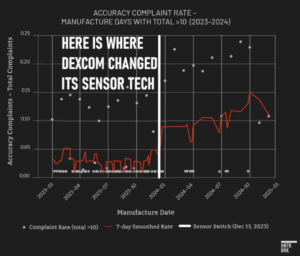 These reports do not necessarily indicate that a device was responsible for the injury or death; however, the database can help manufacturers and the FDA identify problematic products. MAUDE is updated monthly. Asked about these deaths, Dexcom — which is set to report earnings later this week — did not respond to repeated requests for comment.
At least 13 G7 users have died since its launch in 2023, according to MAUDE reports, and these stories align with conversations Hunterbrook has had with endocrinologists across the country, who have reported repeated G7 failures. Two said when they turned to the company for answers, representatives acted surprised, which one doctor described as “gaslighting.” Hunterbrook spoke to other G7 users who also described inaccurate sensor readings leading to crises.
Read more: Three More Deaths Reported After Dexcom G7 Faults
Preserving Skin Integrity with Chronic Device Use in Diabetes by Laurel H. Messer, RN/MPH/CDE, Cari Berget, RN/MPH/CDE, Christie Beatson, RD/MS/CDE, Sarit Polsky, MD, and Gregory P. Forlenza, MD, for Diabetes Technology & Therapeutics by libertpub.com/doi/epdf/10.1089/dia.2018.0080
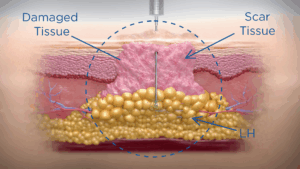 Skin integrity and diabetes device placement are ongoing concerns for people with diabetes who utilize continuous glucose monitors (CGMs) and continuous subcutaneous insulin infusion pumps. This is especiallysignificant for individuals with skin sensitivities, pediatric patients, and those who use devices chronically. Dermatological complications are often cited as a barrier to device use and a reason for discontinuation of the device. Furthermore, skin integrity issues are a frequent topic of discussion during follow-up visits for diabetes. However, there is a lack of evidence-based literature to guide providers in managing these issues.
Conclusion: As diabetes technologies evolve to utilize long-lasting, skin-adherent components, the medical diabetes community must prioritize skin integrity as never before. Partnerships between academia, industry, diabetes specialists, dermatologists, regulatory agencies, and the influential diabetes community must yield better solutions for this very real and prevalent concern. Studies are needed to explore prevalence, prevention, and solutions to common skin-related issues.
Read more: Preserving Skin Integrity with Chronic Device Use in Diabetes
An Anniversary!
 A tiny aside: Today, 3 November 2025, is my 24th wedding anniversary! I feel so excited, happy, and successful!!! Richard and I are deeply committed and connected, and we work steadily to address our issues and concerns, as well as manage our health, in the spirit of aging gracefully together and with gratitude.
Of course, I remember our wedding day vividly! I won’t bore you with the wonderful details!
 But I was not using an insulin pump in 2001 … only MDI and Dexcom CGM. I was less familiar with how to manage stress (even happy ones) with insulin. So all day, my blood sugars were in the 400s! The reception was over at 4 pm, and by 6 pm, my blood sugar levels were crashing due to the excessive (stacked) insulin. What a challenge! And how nice that I have better technology and knowledge!!!